Reviewed · TOURS
Funchal Agriculture Green Tour
Madeira’s farming life is the real subject here, not just a pretty drive between viewpoints. You’ll enter a private banana field, see how bananas are sorted and packed, learn island grafting methods, visit a family cattle farm, and finish among the old sugarcane machinery of Porto da Cruz.
I like the small group of no more than eight and the generous local lunch, which includes tapas, dessert, drinks, and coffee. I also like the access: these are private farm visits, not quick roadside stops. The main consideration is that the day involves several visits, a fair amount of driving, and some walking on working agricultural land, so bring sturdy shoes and a jacket.
In This Review
- Key points to know before booking
- Why Madeira’s farms make a good day out
- Inside a private banana field near Funchal
- From the field to the banana packing operation
- Grafting and fruit trees at the agriculture school
- A countryside lunch in Santana
- Porto da Cruz and the old rum machines
- A family cattle farm with a century of work
- How the small group affects the experience
- Is $100 a fair price?
- What to bring and who should book
- Should you book the Funchal Agriculture Green Tour?
- FAQ
- How long does the Funchal Agriculture Green Tour last?
- Where does pickup take place?
- Can visitors from Calheta or Ponta do Sol join the tour?
- Is lunch included?
- Is the rum tasting included?
- Will the rum factory machines be operating?
- Is banana tasting included?
- What languages are available?
- How large is the group?
- Are children and wheelchair users able to join?
Key points to know before booking
- Private banana and cattle visits: You see working farms and meet the agricultural world behind Madeira’s food.
- Banana business in action: Learn what happens after bananas are cut, from selection to packing, followed by a tasting when ripe fruit is available.
- Agriculture school stop: See local and international fruit trees and learn how grafting helps farmers grow productive plants.
- A full Madeiran lunch: Expect home-style bread, local tapas, a fish or meat main course, vegetables, dessert, drinks, and coffee.
- Porto da Cruz rum factory: Old steam machines are still used during the April to May sugarcane season.
- Best for curious eaters: This suits adults, families with children over six, and anyone who wants more than standard sightseeing.
Why Madeira’s farms make a good day out
Funchal is often presented through gardens, cable cars, and sea views. Those are worthwhile, but agriculture explains much more about the island’s daily life. Steep ground, mild weather, careful irrigation, and small family plots have shaped what people grow and eat here.
This six-hour excursion gives you a practical look at that system. You are not only told that bananas matter to Madeira. You see the plants, hear how farmers care for them, and follow the fruit toward the government-run banana business, where it is selected and packed.
I find that approach more useful than a quick tasting alone. You learn why farming on an island is skilled work, and you see how local producers connect farms with shops, kitchens, and traditional foods.
The tour begins with hotel pickup in Funchal, Caniço, Garajau, or Santa Cruz. Pickup is included for hotels in Funchal and Caniço. If you are staying in Santa Cruz, Calheta, or Ponta do Sol, you may need to meet the guide in Caniço or Funchal. People staying farther away, including Santana or São Vicente, can use the meeting point at the Hotel Madeira Panoramico parking area on the main road.
Allow a little patience at the start. Traffic, road works, and accidents can delay pickup by about 15 minutes, and the exact time may be adjusted according to your hotel. Check your email and WhatsApp messages for the final details.
Other ways to spend a day on Funchal:
- Porto Moniz, Seixal, Fanal Forest, Cliff Skywalk in Open Roof 4X4
★ 5.0 · 3,631 reviews - Funchal: Pico do Arieiro Sunrise Transfer Self-guided Hike
★ 4.9 · 2,798 reviews - Madeira Funchal:East Tour Pico Arieiro & Santana&Laurissilva
★ 4.9 · 1,994 reviews
Inside a private banana field near Funchal
The first major stop takes you into a private banana field in the Funchal area, around São Martinho. The guided visit lasts about 40 minutes.
This is a chance to see banana farming at close range rather than simply spot plantation rows from a bus window. You learn how farmers look after the plants and how the trade works on a practical level. Since the visit is on private land, access is more personal than a standard public attraction.
The tropical appearance can make banana growing look easy. The point of this stop is to show the care involved. Farmers work with the land, monitor the plants, and prepare the crop for the next stage. The guide helps connect those tasks with Madeira’s wider agricultural economy.
You may receive a banana tasting at the end. In winter, ripe bananas are not always available, so do not book this part expecting a guaranteed sample. That seasonal note matters, especially if tasting local produce is one of your main reasons for coming.
From the field to the banana packing operation
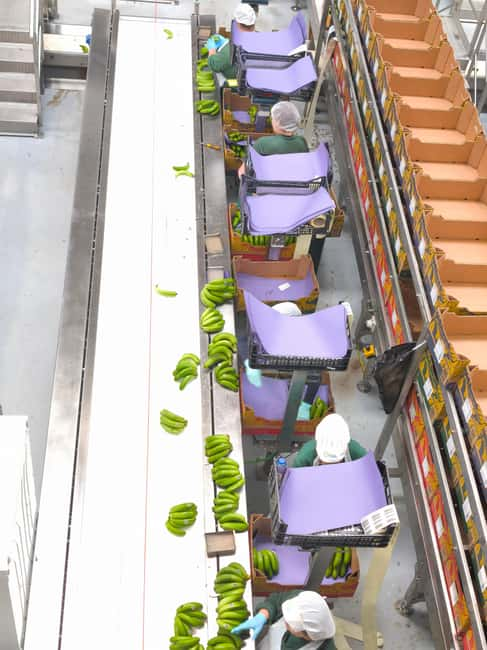
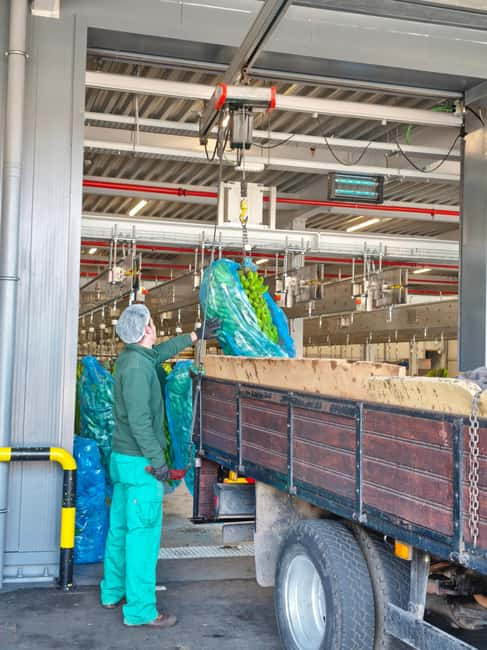
The next stop is GESBA, the company responsible for managing Madeira’s banana sector. The guided visit lasts about 45 minutes.
Here you see what happens after the bananas are cut. The focus is on selection and packing, giving you a clearer picture of the business behind the farm visit. It is a useful contrast: the private field shows cultivation, while this stop shows the organized handling of the crop.
I like this two-part design. Many food tours stop at the point of harvest, but this one follows the product farther along. You begin to understand that the banana trade is not just about growing fruit in a favorable climate. It also depends on grading, preparation, and getting the right produce ready for sale.
The visit is educational rather than flashy. If you want a tour built around monuments or dramatic scenery, this may feel modest. If you want to understand Madeira through its working economy, it earns its place in the morning.
Grafting and fruit trees at the agriculture school
The route then follows older roads toward an agriculture school at Caminho do Arieiro 97a. Plan on about one hour here.
This is where the tour shifts from commercial farming to plant science. Local farmers come to buy trees for planting, and you learn about grafting methods used on Madeira. Grafting allows growers to join parts of different plants so they can produce a desired variety or make better use of established root systems. The exact method shown will depend on what is being presented during your visit, but the purpose is clear: local farming relies on experience and careful plant selection.
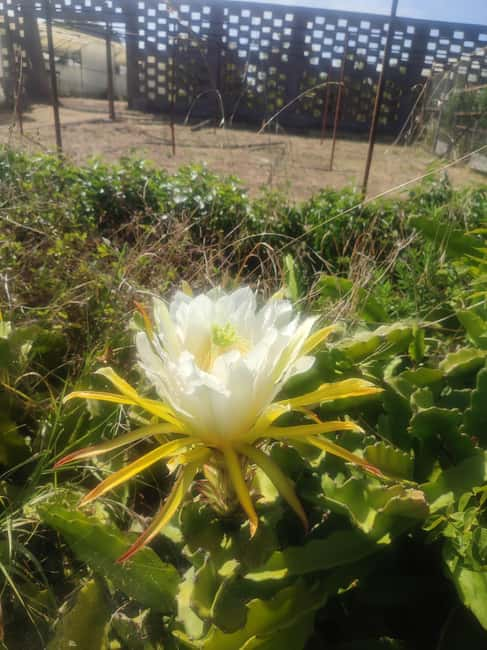
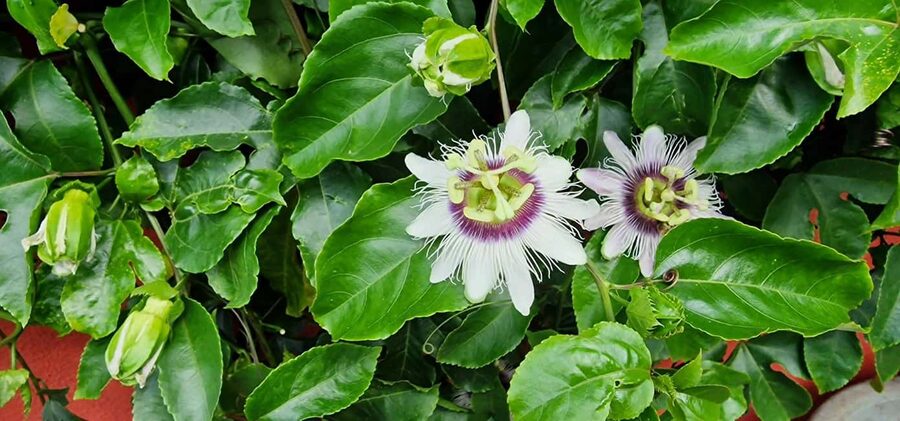
The school grounds also include international trees planted many years ago, along with local varieties such as avocados and lemon trees. Fruit tasting may be offered when produce is in season.
That seasonal detail is important. The school is worth visiting for the explanation and the range of plants, not only for the chance to eat fruit. At the right time of year, tasting makes the stop more memorable, but it should be treated as an extra rather than a promise.
This part may especially suit families. One recent family booking found the day educational and fun for children, with animals appearing at several points along the route. Children must be at least six years old, and the experience is not suitable for wheelchair users.
Same island, a completely different kind of day:
- Madeira Dolphin and Whale Watching on a Ecological Catamaran
★ 4.5 · 1,957 reviews - VipDolphins Luxury Whale Watching
★ 5.0 · 1,709 reviews - From Funchal: Transfer to Pico do Arieiro & Pico Ruivo Trail
★ 4.9 · 1,591 reviews - Whale and Dolphin Watching Tour in Madeira
★ 5.0 · 1,192 reviews
A countryside lunch in Santana
After the school, the vehicle heads north toward Santana, passing farms and working rural areas. Lunch takes about an hour in a cozy house restaurant outside the city.
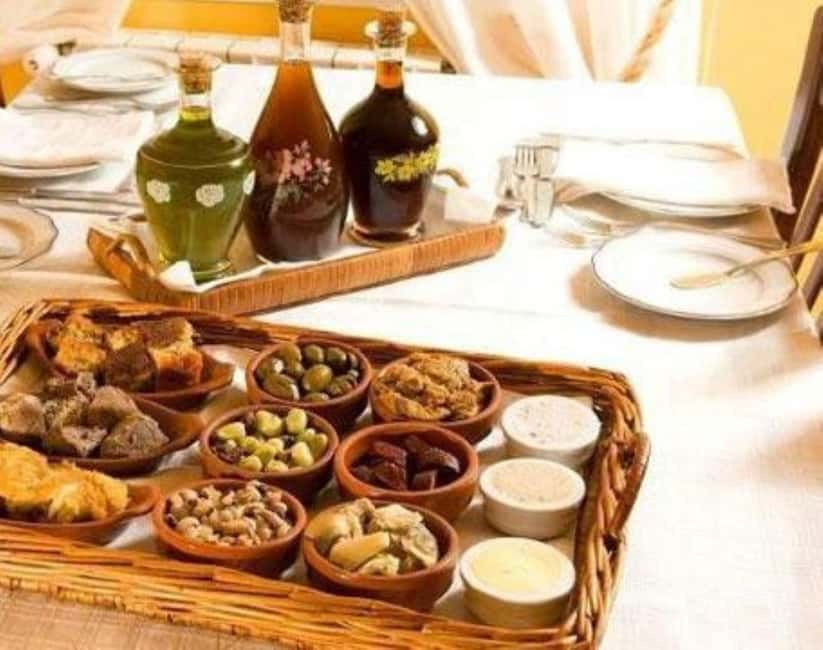
The meal is one of the strongest parts of the value. You get fresh-baked local bread, tapas made with regional food, a choice of fish or meat for the main course, fresh vegetables, homemade dessert, drinks, and coffee. This is not a light snack inserted between attractions. It is a full meal and gives the day a proper pause.
I prefer this kind of lunch to a rushed stop at a large tourist restaurant. Food prepared in a home-style setting can tell you more about local habits than another polished attraction. The menu choice also makes the meal practical for different tastes, though the supplied information does not specify the exact dishes available on the day.
One family described this as their favorite meal during their time in Portugal. That is a strong sign of what the lunch is trying to do: serve familiar Madeiran food in a relaxed rural setting rather than turn the meal into a formal tasting session.
Come hungry, but keep your schedule flexible. With several stops and road time, the lunch is part of the pace of the excursion. You are not being hurried through a checklist.
Porto da Cruz and the old rum machines
The tour continues to Porto da Cruz, a sugarcane-growing area on Madeira’s northern coast. The spirits stop lasts about 40 minutes.
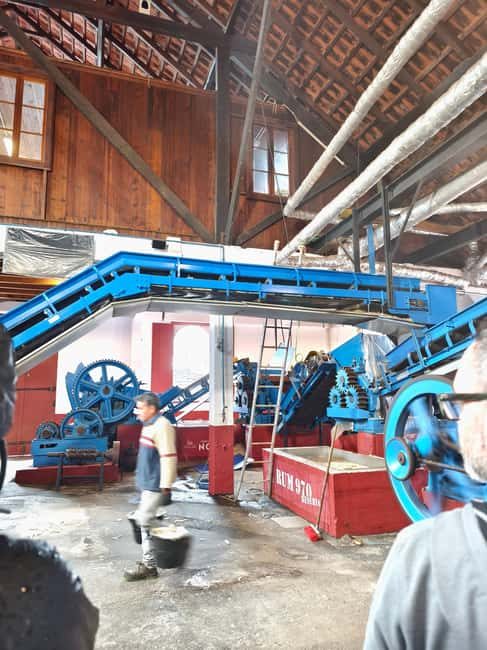
You visit one of Madeira’s oldest rum factories and see the steam machines still used in production. During the sugarcane season, usually April to May, the machinery is operating. Outside that period, you can still see the factory and learn about its role, but the working steam equipment is not guaranteed to be running.
This is a fine example of why timing matters on agricultural tours. The factory is tied to the growing and processing calendar, not to a fixed show schedule. If you visit in spring, you may see the old system in use. At other times, the value comes from seeing the equipment and understanding the connection between sugarcane, rum, and Madeira’s farming traditions.
Porto da Cruz also gives the day a change of scenery. The area is described as a beautiful remote beach setting, so the stop is not only about machinery. Still, this is a short visit. Do not expect a long beach break or a full rum tasting session. The included rum tasting is part of the stop, and the overall focus remains on production and place.
A family cattle farm with a century of work
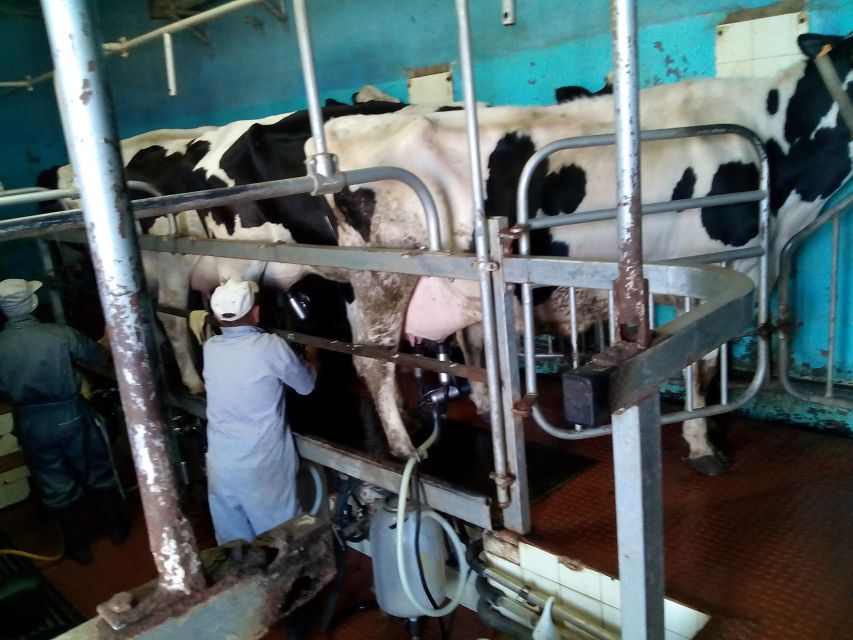
The final agricultural visit is to a private cattle farm with more than 100 years of family involvement. The stop takes about 40 minutes and is associated with the Caniço area.
The farm supplies much of the milk used to make Madeira’s well-known requeijão cheese. You can see older milking techniques and learn how cattle farming supports a local food tradition. This gives the tour a useful second food story after the bananas and sugarcane.
The farm is also set in a beautiful region with wide views. That combination of animals, farming methods, and scenery makes it one of the more distinctive visits of the day. It feels less like a conventional attraction and more like a brief invitation into a working family business.
If you are traveling with children, this may be a favorite stop. Animals provide an easy point of interest, while the guide adds context for adults. Keep in mind that this is an active farm, not a fully adapted visitor center. Comfortable footwear is sensible, and the experience is not suitable for wheelchair users.
The order of the stops may make the route feel like a broad loop across the island. The listed visits include São Martinho, GESBA, Caminho do Arieiro, Santana, Porto da Cruz, and Talho do Caniço before returning to Funchal, Caniço, or Santa Cruz. Travel time is part of the six-hour experience, but it also lets you see how farming changes from the city edge to the northern countryside.
How the small group affects the experience
The group is limited to eight people. That size matters on private land, where a large coach group would make conversation and movement harder.
You have a better chance to ask about grafting, milk production, banana care, or the rum machinery without waiting behind dozens of people. The guide also has more room to adjust explanations for children or for visitors who want more detail about food and agriculture.
The tour is offered in English, Spanish, French, and German. The individual guide’s name is not provided in the booking information, so you should not expect to choose a particular guide. Recent French-language bookings praised the guide’s friendly, cheerful manner and the way the agricultural world was explained. Another French-speaking group found the information clear and the scenery impressive.
Those comments match the structure of the day. The guide’s role is important because many stops are not self-explanatory. A banana plant, grafted tree, or steam engine can be interesting on its own, but the story of how each fits into Madeira’s life gives the visit its purpose.
Is $100 a fair price?
At $100 per person, the cost is not low, but the inclusions make it reasonable for a six-hour small-group outing. You receive hotel pickup and drop-off from the covered areas, entry to the banana farm, agriculture school, and cattle farm, a substantial local lunch with drinks and coffee, and rum tasting.
You also avoid arranging several separate visits across the island. Private farm access would be difficult to organize independently, and the route links food production, plant growing, cattle, and spirits in one day.
The value is strongest if you want interpretation and access, not simply transportation. If your priority is the cheapest way to see northern Madeira, you may find the price high. If you value a limited group, included meal, and contact with working farms, the package makes more sense.
The tour is also a good use of a day for someone who has already seen Funchal’s central sights. It offers a different view of the island without requiring you to rent a car or plan a complicated route.
What to bring and who should book
Wear comfortable shoes. You may walk around farms and rural properties, and the ground may not be as smooth as a city pavement. Bring a warm layer too, since Madeira’s weather can change as the road climbs and crosses to another part of the island.
This excursion is best for:
- Adults interested in food, farming, and local traditions
- Families with children aged six and older
- Visitors who prefer small groups to large coach tours
- Curious eaters who value a full regional lunch
- People who want private access to working farms
- Anyone interested in Madeira’s banana, cattle, and sugarcane trades
It is less suitable if you want a beach day, a strenuous outdoor walk, or a tour focused on famous landmarks. The schedule is full, and the farm visits are the main event.
Cancellation is free up to 24 hours before the start, and you can reserve now and pay later. The tour does not operate on bank holidays, Christmas Day, or January 1. Pickup may be delayed by traffic, road works, or accidents, so keep some flexibility around the start and end of your day.
Should you book the Funchal Agriculture Green Tour?
Book it if you want to understand Madeira through the food on your plate and the people who produce it. The combination of a private banana field, the banana packing operation, grafting at the agriculture school, a century-old cattle farm, a generous lunch, and Porto da Cruz rum gives you a clear view of the island beyond its postcard scenery.
I would be especially inclined to book in April or May, when the sugarcane factory’s steam machines may be operating. In winter, remember that banana tasting is not always possible, and fruit at the agriculture school depends on the season.
Skip it if you prefer to set your own pace or want long stops at major sights. For everyone else, the $100 price buys a well-filled day, useful local context, transport, food, and access that is hard to arrange alone.
FAQ
How long does the Funchal Agriculture Green Tour last?
The experience lasts about six hours, including the farm visits, lunch, rum factory stop, and transportation between locations.
Where does pickup take place?
Pickup is available from designated hotels or meeting points in Funchal, Caniço, Garajau, and Santa Cruz, with free pickup from hotels in Funchal and Caniço.
Can visitors from Calheta or Ponta do Sol join the tour?
Yes, but pickup is not included from those areas. You can meet the guide in the Caniço or Funchal area.
Is lunch included?
Yes. Lunch includes fresh-baked local bread, tapas, a choice of fish or meat, fresh vegetables, homemade dessert, drinks, and coffee.
Is the rum tasting included?
Yes. A rum tasting is included at the Porto da Cruz stop.
Will the rum factory machines be operating?
The steam machines operate during the sugarcane season, usually from April to May. Operation is not guaranteed at other times.
Is banana tasting included?
A banana tasting is offered at the end of the banana business visit when ripe bananas are available. In winter, ripe fruit is not always available.
What languages are available?
The live guide service is available in English, Spanish, French, and German.
How large is the group?
The tour is limited to eight participants.
Are children and wheelchair users able to join?
Children under six cannot join the tour. The experience is not suitable for wheelchair users. Comfortable shoes and warm clothing are recommended.
Recently added Funchal trips
- Madeira: Craft Beer Tour★ 4.2 · 3 reviews
- Shore Excursion – Northwest Terraces and Volcanic Pools 4×4 tour★ 5.0 · 3 reviews
- Wine taste, 4×4 Jeep Adventure and Cabo Girão Skywalk★ 4.5 · 3 reviews
- Funchal: Sacred Art Museum of Funchal Entry Ticket★ 4.6 · 3 reviews
- Beautiful walks in Rabaçal, Madeira★ 4.0 · 3 reviews
- Do Funchal – Câmara de Lobos & Sky Walk Tuk Tuk Tour (2h30)★ 5.0 · 3 reviews
- Private Breathtaking Sunrise Private Jeep Tour★ 5.0 · 3 reviews
- Madeira Pack 1 – Santana + Porto Moniz+ Curral das Freiras★ 5.0 · 3 reviews
Tours, compared.
Skywalk, Porto Moniz, Seixal, and Fanal 4WD Tour
Read our review →
Enchanted Terraces, Porto do Moniz & Fanal 4WD Tour
Read our review →
West Madeira Waterfalls and Fanal Forest Tour
Read our review →
All Inclusive Whale and Dolphin Watching Luxury Tour
Read our review →