
Reviewed · MADEIRA
Funchal: famous places and magical corners.
Funchal’s story comes alive on foot, from the sea-facing Fort São Tiago to the grand Sé Cathedral. This 2.5-hour walk links the city’s best-known sights with painted doors, a local bakery, a historic house, and a few secret stops that are easy to miss on your own.
I like the private format, which lets Carlos or Rosario adjust the pace, and I like that the tour visits several places without adding entrance fees. The guides have lived in Funchal for five years and focus on the city’s past, not just quick photo stops. The main drawback is the uphill walk to Quinta das Cruzes and the stairs afterward, so this is not a good choice for wheelchair users or anyone who finds uneven walking difficult.
In This Review
- Key points to know before booking
- Starting beside the Mosquito in Almirante Reis Park
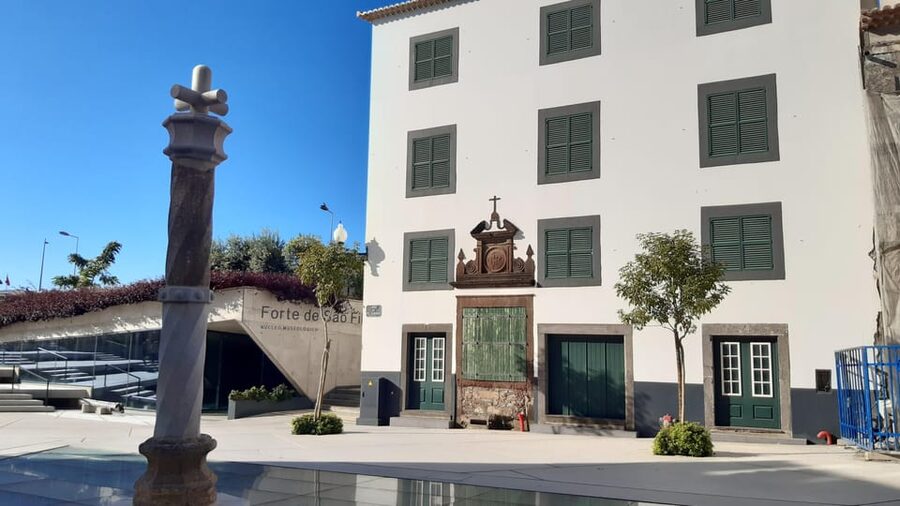
- Fort São Tiago and Funchal’s seaward defenses
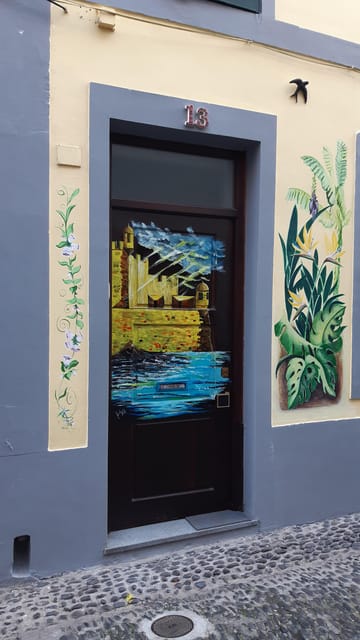
- Painted doors along Rua Santa Maria
- Lavradores Market and the tastes of Madeira
- A local bakery and the route’s smaller surprises
- The uphill walk to Quinta das Cruzes
- São Pedro Church and Funchal’s religious past
- Municipal Garden, a green pause in the center
- Ending at Sé Cathedral, Funchal’s great landmark
- What the private format means at $50
- Practical preparation for the 2.5-hour walk
- Who will get the most from this Funchal walk?
- Should you book this Funchal walking tour?
- FAQ
- How long does the Funchal walking tour last?
- What time does the tour start?
- Which languages are available?
- Who guides the tour?
- Where does the tour start?
- Does the price include entrance fees, food, or drinks?
- Is the walk suitable for wheelchair users or young children?
Key points to know before booking
- Fort São Tiago begins the history lesson: See the yellow fortress above the sea and hear about Funchal’s need for coastal defenses.
- Rua Santa Maria adds local color: Painted doors turn an ordinary street into an open-air art walk.
- The route mixes famous sights with small surprises: A bakery, a secret stop, and a lesser-known corner break up the formal monuments.
- Quinta das Cruzes requires a short climb: You will walk about 200 meters uphill, then descend a staircase street.
- The guides are Carlos and Rosario: Tours are offered in English or Spanish, Monday through Saturday, usually at 10 or 11 am.
- The $50 price covers a private, carbon-neutral walk: You pay no entry fees for the places included, but food, drinks, and transport are extra.
Starting beside the Mosquito in Almirante Reis Park
The walk begins at Jardim do Almirante Reis, near the displayed steamship called Mosquito. Look for the guide holding a Portuguese flag. Your guide will be either Carlos or Rosario, and both have spent five years living in Funchal while studying its stories and less obvious corners.
Starting near the lower city makes practical sense. You begin close to the waterfront and the old port area, then move through streets where Funchal’s working life, trade, religion, and grand homes come together. The route is not a bus tour with a list of distant viewpoints. You spend the time walking, stopping, and hearing how the city developed over more than six centuries.
The usual start times are 10 am and 11 am, Monday through Saturday. A morning departure is useful in Madeira’s strong sun and gives you the rest of the day for museums, a cable car ride, or a slow lunch. Check the available time when you book, since the exact start depends on the date.
Other ways to spend a day on Funchal:
- Porto Moniz, Seixal, Fanal Forest, Cliff Skywalk in Open Roof 4X4
★ 5.0 · 3,631 reviews - Funchal: Pico do Arieiro Sunrise Transfer Self-guided Hike
★ 4.9 · 2,798 reviews - Madeira Funchal:East Tour Pico Arieiro & Santana&Laurissilva
★ 4.9 · 1,994 reviews
Fort São Tiago and Funchal’s seaward defenses
The first major stop is Fort São Tiago, a solid fortress overlooking the sea. Its position helps explain Funchal’s past better than a classroom lecture could. Madeira’s capital grew as a port on routes linking Europe with Africa, Asia, and the Americas, and that wealth also made it a target.
The fort recalls the period when pirate attacks were a real threat. You can look out toward the water and picture why a city tied to maritime trade needed defenses close to the shore. The guide’s role here is important. A fortress can be a quick photograph, but the story of trade, danger, and coastal protection gives the building a reason to matter.
This is also an early chance to ask questions. Since the group is private, you do not have to wait for a large crowd to move along. If you want more detail about Funchal’s port, attacks, or the city’s growth, this is a useful point to speak up.
Painted doors along Rua Santa Maria
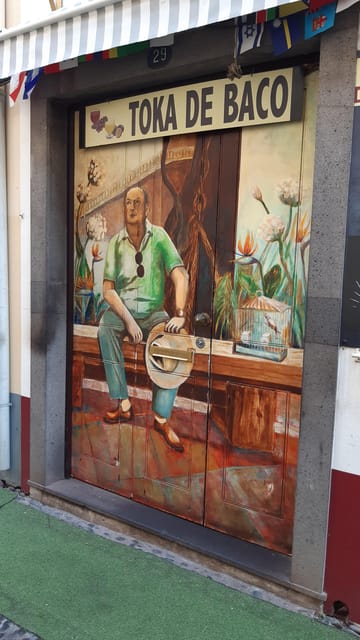
From the fort, you walk to Rua Santa Maria, one of Funchal’s most distinctive streets. Its painted doors bring color and personality to the route. They are not grand monuments, but they help you notice how art has changed an old urban street into a place where the ordinary deserves a closer look.
I like this part because it slows the tour down. You are not only looking up at churches and fortifications. You are looking at doorways, facades, and details at eye level. Have your camera ready, but also listen to the guide’s explanation of the street and its place in Funchal’s older quarters.
The street is a useful reminder that the city is more than its major attractions. Even if you return later without a guide, you will know to look for small details rather than simply follow the main shopping roads.
Lavradores Market and the tastes of Madeira
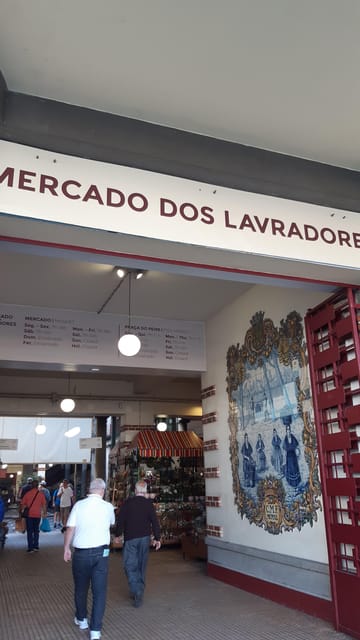
The walk continues to the farmers’ market, officially known as Mercado dos Lavradores. This is one of the city’s liveliest stops, filled with local aromas, produce, and everyday activity. The market gives you a sense of Funchal as a working city, not just a holiday center.
A guide adds value here by explaining what you are seeing and how the market fits into local life. Without context, a market visit can become a quick pass through stalls. With Carlos or Rosario, you can ask about local flavors and the products that catch your eye.
Do not expect the tour price to cover purchases, snacks, or drinks. Personal spending is extra, and the market may tempt you to stop for something to eat later. The timing also matters. You will have a better chance to appreciate the market before the day becomes too warm and crowded with activity.
Same island, a completely different kind of day:
- Madeira Dolphin and Whale Watching on a Ecological Catamaran
★ 4.5 · 1,957 reviews - VipDolphins Luxury Whale Watching
★ 5.0 · 1,709 reviews - From Funchal: Transfer to Pico do Arieiro & Pico Ruivo Trail
★ 4.9 · 1,591 reviews - Whale and Dolphin Watching Tour in Madeira
★ 5.0 · 1,192 reviews
A local bakery and the route’s smaller surprises
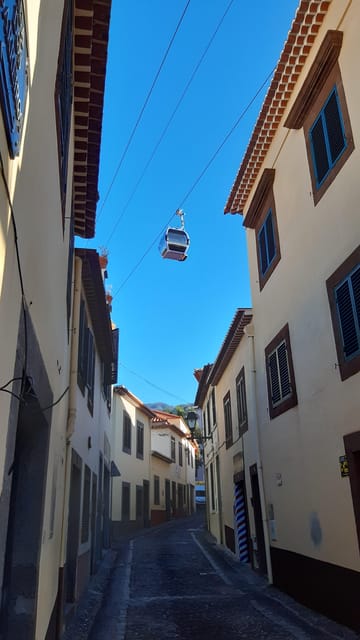
The itinerary includes a stop at a local bakery, along with a secret stop and another lesser-known corner. The exact details of these locations are not specified, which is part of the appeal. They break up the sequence of major sights and give the guide room to show you places that do not always appear in standard city walks.
I would treat these stops as small discoveries rather than promised attractions on the scale of the cathedral or fort. The bakery is not a meal included in the $50 price, so bring water and money if you want to buy something. Food and drinks are specifically excluded.
These informal pauses can also make the tour feel less rushed. A 2.5-hour walk is long enough to tell a connected story, but short enough to fit into a day in Funchal. The strongest part of the experience may be the way the guide links these quiet corners to the better-known monuments.
The uphill walk to Quinta das Cruzes
Quinta das Cruzes is a historic mansion with gardens and one of the route’s most important changes in pace. To reach it, you walk uphill for about 200 meters. The climb is not described as long, but it is worth taking seriously in Madeira, where even a short rise can feel demanding in the sun.
The house and grounds add a different side of Funchal. The fort and market connect you to defense and daily trade. Quinta das Cruzes points toward the city’s older, more private world, where grand homes and gardens reflected status and wealth.
Entrance fees to the places visited are not included because the tour is designed around free access. If a particular museum area or interior has a separate charge on your date, do not assume it is covered. The experience centers on exploring the city without extra admission costs, so check what your guide plans to enter before paying for anything separately.
The route then goes down a staircase street. That descent is the main physical warning for the walk. The tour is not suitable for wheelchair users, and it is also not recommended for children under six, pregnant women, or people over 80. The supplied information also lists people over 70 as unsuitable, so older participants should take that restriction seriously and ask before booking.
São Pedro Church and Funchal’s religious past
São Pedro Church is included among the important places connected with the walk. This baroque church holds centuries of local history and gives you a chance to see the city’s religious side. Its style contrasts with the military shape of Fort São Tiago and the open-air character of the market.
The church is best appreciated with time to examine its details. Your guide can explain why it matters and place it within Funchal’s development. The route information does not promise a full interior visit at every stop, so ask Carlos or Rosario what access is planned on the day.
This is one reason the live guide matters. A church can look beautiful while its meaning remains unclear. A few well-timed facts can help you understand how faith, wealth, and community shaped the city’s buildings.
Municipal Garden, a green pause in the center
The Municipal Garden offers a welcome change from stone streets and busy commercial areas. It is a green space in the middle of Funchal, useful for seeing how the city makes room for plants and shade within the urban center.
The garden is not presented as a long rest stop, so do not count on a full break here. Still, it gives the walk visual variety. You move from sea defenses to old streets, from market stalls to gardens, and then toward the cathedral. That range keeps the tour from feeling like a line of similar buildings.
Bring water, sunscreen, a hat, and sunglasses. The tour provider also advises cool, comfortable clothing. In winter, carry a light sweater or windbreaker, and consider an umbrella because rain can arrive even during a short city walk.
Ending at Sé Cathedral, Funchal’s great landmark
The tour culminates at Sé Cathedral, the city’s majestic Gothic cathedral and one of Funchal’s defining buildings. Its formal presence makes a fitting end to a walk that has moved through military, commercial, domestic, and religious parts of the city.
The cathedral is more than a final photograph. It helps tie together Funchal’s growth as a major port and its long connection with Portugal’s religious and political life. Listen for the details about its construction and role in the city, then take a moment to look at the building from outside before the tour ends.
There is a small point to clarify before booking. The route describes the cathedral as the finish, while the meeting information says the activity ends back at the original meeting point in Almirante Reis Park. Ask the provider whether you should expect to finish at Sé Cathedral or return to the start. This matters if you have a restaurant booking, shore excursion, or another timed activity afterward.
What the private format means at $50
At $50 per person, this is not the cheapest way to see Funchal. You can walk through the city independently and view many exterior sights for nothing. The price becomes easier to justify if you want a private group, a live guide, and a connected explanation of places you might otherwise pass without understanding.
No entrance fees are added for the places included, and the tour has a carbon-neutral footprint. You still pay for any bakery purchase, market food, drinks, personal expenses, and transport to or from your lodging.
The private format is especially useful if you have a particular interest in Funchal’s history or want the pace adjusted. One of the strongest details from the feedback is that Rosario kept the tour informative while moving at the group’s pace. She was singled out for making Funchal’s history interesting, and that personal approach is exactly what you want from a small walking tour.
The tour is offered in English or Spanish. It does not specify a maximum number beyond private-group status, so confirm the group arrangement if that affects your decision.
Practical preparation for the 2.5-hour walk
Wear comfortable shoes with a good grip. The route is mostly through the flat central part of Funchal, but the walk to Quinta das Cruzes and the staircase street afterward add effort. Thin, cool clothing works well in warm weather, with a light layer or rain protection in winter.
Bring:
- Water and sunscreen
- Sunglasses and a sun hat
- A camera
- Money for bakery items or market purchases
- A light sweater, windbreaker, or umbrella in cooler or rainy weather
Pets, bikes, baby strollers, bags, weapons, and sharp objects are not allowed. The restrictions on strollers and bags may affect how you plan for a young child, although children under six are not considered suitable for the activity.
You can cancel up to 24 hours before the start for a full refund, and the reserve-now, pay-later option keeps your plans flexible. That is useful when Madeira’s weather or cruise schedules may change.
Who will get the most from this Funchal walk?
I would choose this tour if you have only a short time in Funchal and want the city’s main sights explained in one outing. It also suits you if you prefer local stories to a long museum visit, or if you enjoy finding small details such as painted doors, bakeries, and quiet corners between major monuments.
It is a good match for couples, friends, and families with older children who can manage a 2.5-hour walk. English and Spanish speakers can join without relying on written information alone.
I would skip it if you need step-free access, dislike uphill walking, or want a tour focused on Madeira’s scenery outside the city. This is an urban history walk. It does not include transfers, mountain views, or a formal food tasting.
Should you book this Funchal walking tour?
Book it if you want an efficient first look at Funchal with a private guide, no added entry fees, and a route that goes beyond the usual cathedral-and-market checklist. The high marks are deserved for the clear history, friendly guiding, and ability to move at your pace, with Rosario receiving especially strong praise for her storytelling.
Before paying, confirm the final meeting point and make sure the climb and stairs suit everyone in your group. At $50, the value comes from the guide and the private format, not from included food or admissions. If that sounds right, this is a practical way to get your bearings and see Funchal through the eyes of someone who knows its past and its quieter corners.
FAQ
How long does the Funchal walking tour last?
The guided walk lasts about 2 hours and 30 minutes.
What time does the tour start?
Tours generally begin at 10 am or 11 am, Monday through Saturday. Check availability for the exact time on your chosen date.
Which languages are available?
The tour is offered in English and Spanish.
Who guides the tour?
Your guide will be Carlos or Rosario. Both have lived in Funchal for five years and focus on the city’s history and lesser-known places.
Where does the tour start?
Meet beside the steamship Mosquito at Jardim do Almirante Reis. The guide will hold a Portuguese flag.
Does the price include entrance fees, food, or drinks?
The tour includes access to the free places visited. Food, drinks, snacks, personal expenses, and transport to or from your lodging are not included.
Is the walk suitable for wheelchair users or young children?
The tour is not suitable for wheelchair users or children under six. It also includes a 200-meter uphill walk and a staircase street, so check the route carefully if anyone in your group has mobility concerns.
Recently added Funchal trips
- Madeira: Craft Beer Tour★ 4.2 · 3 reviews
- Shore Excursion – Northwest Terraces and Volcanic Pools 4×4 tour★ 5.0 · 3 reviews
- Wine taste, 4×4 Jeep Adventure and Cabo Girão Skywalk★ 4.5 · 3 reviews
- Funchal: Sacred Art Museum of Funchal Entry Ticket★ 4.6 · 3 reviews
- Beautiful walks in Rabaçal, Madeira★ 4.0 · 3 reviews
- Madeira Pack 1 – Santana + Porto Moniz+ Curral das Freiras★ 5.0 · 3 reviews
- Do Funchal – Câmara de Lobos & Sky Walk Tuk Tuk Tour (2h30)★ 5.0 · 3 reviews
- Private Breathtaking Sunrise Private Jeep Tour★ 5.0 · 3 reviews