
Reviewed · COASTEERING & SEA ADVENTURES
Madeira: Coasteering Adventure with Snorkeling, w/pick-up
Madeira’s coast is best enjoyed from the water, and this coasteering trip at Ponta de São Lourenço gives you several ways to get there: scrambling, swimming, snorkeling, and cliff jumping. You start with smaller jumps, then choose your own level as the route grows more exciting. Guides such as Marcos, Charlie, Matilde, Rafa, and Steve have earned praise for calm instruction and good humor.
I like the choice built into the route. You can attempt the highest jump, listed at 13 meters, or take a smaller jump or swim around it without being shamed. I also like the free photos and videos, since carrying a phone over wet rocks is a poor plan. The main consideration is fitness: this is not a gentle boat outing, and the rocky sections require scrambling, balance, and confidence in the water.
In This Review
- Key points to know before you book
- What coasteering in Madeira really involves
- Pickup from Funchal or Caniço
- Getting fitted with wetsuit, helmet, and life vest
- Starting small and building toward bigger jumps
- Scrambling across the rocky coastline
- Sea caves, natural pools, and snorkeling
- A break in the middle of the route
- Is the $72 price good value?
- Who should book this Madeira adventure?
- Languages, cancellation, and useful planning details
- Should you book it?
- FAQ
- Where does the coasteering activity take place?
- How long does the activity last?
- Where can I be picked up?
- Is pickup available outside Funchal and Caniço?
- How high is the biggest jump?
- Do I have to do the highest jump?
- What equipment is provided?
- What do I need to bring?
- Is the activity suitable for children?
- Can non-swimmers join?
- Which languages are available?
- Are photos and videos included?
- Can I cancel the booking?
- Is the activity suitable for someone with an injury?
Key points to know before you book
- The 13-meter jump is optional: Smaller jumps and alternative routes are available throughout the outing.
- Ponta de São Lourenço is the setting: Expect open coastal scenery, rock formations, natural pools, and sea caves.
- You get a full equipment set: Wetsuit, helmet, life vest, snorkeling gear, neoprene socks, and boots are supplied.
- The guides shape the experience: Marcos and the wider team focus on technique, safety, encouragement, and fun.
- The sea portion is only part of it: You will also climb, walk over rocks, swim, and negotiate uneven ground.
- Photos and videos are included: Your guides record the action and share the files after the trip.
What coasteering in Madeira really involves
Coasteering is a moving workout along the shoreline. You follow a guide across rocks, enter the sea at selected points, swim through calm sections, climb out again, and jump from ledges into deep water. It feels part hike, part swim, and part natural obstacle course.
The setting near Ponta de São Lourenço adds plenty of visual drama. This eastern end of Madeira is known for its exposed coast and unusual rock shapes. Here, the attraction is not simply reaching a viewpoint. You are right beside the cliffs, looking up at the rock from the water and then back toward the island from sea level.
The route covers about a kilometer of coastline, according to the operating description given during the experience. That does not sound far on paper, but rocky ground and repeated water entries make it feel like a serious half-day outing. You should expect moderate physical effort, not a sightseeing walk with a few splashes.
The guides keep the pace flexible. You might begin with simple jumps and work toward more complicated ones, including front or back flips. You can also invent a jump of your own, but technique matters more than showing off. Listen closely when the guide explains body position, entry, and how to land safely.
More coasteering and sea adventures:
- From Calheta: Whale and Dolphin Watching RIB Boat Tour
★ 4.9 · 298 reviews - Funchal: RIB Whale Watching Cruise and Optional Dolphin Swim
★ 4.6 · 273 reviews - Madeira: Half-Day Coasteering Tour
★ 4.9 · 131 reviews
Pickup from Funchal or Caniço
The trip lasts five hours, including about 30 minutes by van in each direction. Pickup points include the CR7 Museum in Funchal, the Funchal Cable Car, and Sport Zone Cancela. The return uses the same three locations.
Free pickup is available in the Funchal and Caniço areas. If you are staying elsewhere, pickup may be possible for an extra €15 per person, depending on the location. You should confirm this before booking rather than assume the van will come to any address.
The instruction to wait next to the road matters. This is a shared pickup system, so you should be ready at the agreed point and not tucked inside a hotel lobby. Bring water with you, but keep your hands free once the activity begins.
The drive takes roughly half an hour each way. That is enough time to meet the guides and fellow participants, but it also means the active portion is closer to three hours rather than the full five. For most people, that is a sensible balance. You get a proper coastal route without committing an entire day.
Getting fitted with wetsuit, helmet, and life vest
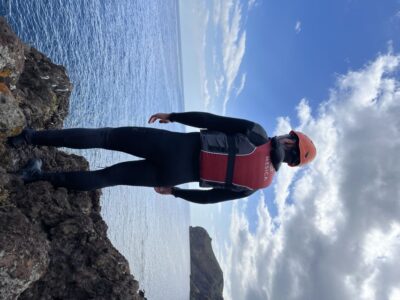
At the activity site, you receive the equipment needed for the outing. This includes a wetsuit, helmet, life vest, snorkeling gear, neoprene socks, and boots. You need to bring your own swimwear and towel.
The wetsuit is useful even when the day feels warm. You spend repeated stretches in the water, and the suit helps keep you comfortable between jumps. The boots and socks also matter because the route involves wet rock, uneven surfaces, and short climbs.
The helmet protects you during the rock sections, while the life vest provides extra support in the water. You still need to be comfortable swimming. The gear does not turn this into a beginner swimming lesson, and the activity is not suitable for non-swimmers.
A safety briefing comes before the route starts. One practical point from the experience is that the introduction may take place in an exposed spot, so you should expect wind and a dramatic first look at the coast. The opening jump can feel serious if you are already nervous. The guides assess your comfort and offer smaller choices, but you should arrive prepared for the activity to begin with energy.
Starting small and building toward bigger jumps
The route is designed to let you gain confidence. Early jumps are smaller, giving you time to get used to the water, the equipment, and the instructions. Once your group is moving well, larger ledges and more technical sections appear.
The highest possible jump is 13 meters. That is a substantial drop, and nobody should feel obliged to attempt it. The most useful feature of this outing is that the big jump is not the only measure of success. You can choose a lower ledge, enter by swimming, or follow an alternative way around.
The guides are encouraging, but the best version of encouragement is not pressure. Marcos is often singled out for patience with nervous participants, including people who had never jumped from height before. Charlie and other members of the team have also been praised for giving clear tips and keeping the mood relaxed.
If you want to try a backflip, you can receive instruction on the basic technique. The same applies to front flips and personal variations. Still, you should treat those options as extras, not requirements. A clean, controlled jump from a modest height is better than an ambitious trick performed badly.
More snorkelling spots around Madeira:
- Kayak and Snorkeling Tour in Underwater Nature Reserve Garajau
★ 4.5 · 111 reviews - Caniço, Madeira: Marine Reserve Kayak & Snorkelling Tour
★ 4.3 · 104 reviews - Funchal: Snorkeling Adventure in Eco-Park / Shore or by Boat
★ 4.5 · 71 reviews - Funchal: Kayak & Snorkeling in Garajau Nature Reserve
★ 4.4 · 68 reviews
Scrambling across the rocky coastline
Between jumps, you move along the shore. This involves walking over rocks, climbing short sections, and finding secure footing before entering the water again. The route is active enough that your legs and arms will work, especially if you are not used to scrambling.
This is where the trip differs from a standard snorkeling excursion. You are not simply taken to a calm bay and left to look beneath the surface. You must keep moving and deal with the natural shape of the coast.
Good footwear helps, but it does not remove the need for care. Follow the guide’s route and take time on wet rock. If you have a back problem, heart problem, or existing injury, this is not the right activity unless you have discussed it with the operator in advance. The minimum age is eight, but children still need to be confident in the water and able to manage the physical sections.
The exposed coast is part of the appeal, but it also means conditions can affect the feel of the outing. You should be ready for wind, wet rock, and changing comfort levels. The guides can adjust the choices, yet they cannot make the coast flat.
Sea caves, natural pools, and snorkeling
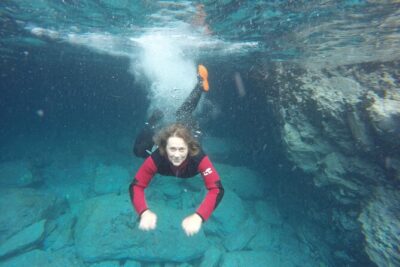
The calmer reward comes in the water. You swim through natural pools and sea caves, then use the snorkeling gear to look for colorful fish and unusual rock formations. These sections give you a chance to slow down after the jumps and absorb the setting.
The snorkeling is not presented as a long marine biology session. It is one part of a broader route, and visibility or sea conditions can affect what you see. Still, it adds variety and gives the half-day a fitting finish.
Several people describe the final swim and snorkeling as a welcome reward after the more demanding rock work. That makes sense. By this point, you have already tested your nerve and balance, so floating through a pool or cave feels like a calmer way to enjoy the coast.
Do not expect to carry your own camera comfortably. Wet hands, a helmet, and scrambling do not mix well with a phone. The guides record photos and videos during the activity and provide them afterward at no added charge. This is a real value point, especially if the jumps become the images you want to remember.
A break in the middle of the route
There is a pause halfway through the outing. You get time to rest, take in the coastal views, and drink some water before continuing.
Bring your own water because it is not included. A towel is also essential for the ride back, and you should pack swimwear rather than rely on changing facilities being available at the coast. Bathing suits and towels are specifically excluded from the equipment provided.
The break will not turn the trip into a leisurely picnic. It is there to help you reset before more climbing, swimming, and jumping. If you are choosing this for a family group with different fitness levels, use that pause to check how everyone feels before taking on the second half.
Is the $72 price good value?
At $72 per person, this is not the cheapest way to see Madeira’s coast. You are paying for an active guided outing rather than simple access to the sea.
The value improves when you count what is included: pickup in Funchal or Caniço, experienced guides, the full equipment set, insurance required under Portuguese law, and free photos and videos. You do not need to rent a wetsuit or snorkeling kit, and you avoid trying to organize a safe route through unfamiliar coastal terrain.
The guide support is the most important part of the price. A cliff-jumping session without proper instruction would be a poor bargain and a risky idea. Here, the group receives a safety briefing, progressive jump choices, help with technique, and supervision through the rock and water sections.
I would consider the price fair for active visitors who want one memorable half-day. It is less convincing if you are mainly looking for relaxed snorkeling, a scenic van ride, or a simple swim. In that case, much of what you pay for is the climbing and jumping that you may not want to do.
Who should book this Madeira adventure?
You should consider it if you:
- Enjoy water sports and outdoor activity
- Want to try cliff jumping with professional guidance
- Are comfortable swimming in open coastal water
- Have moderate fitness and can scramble over rocks
- Like an outing with several activities rather than one fixed stop
- Want photos and videos without carrying your own camera
- Are traveling with children aged eight or older who are water confident
It can work well for families with teenagers. One family with children aged nine and twelve appreciated the range of jump sizes and the way the guides kept the children challenged. Adults in the same group can choose their own level rather than being forced into the biggest jump.
It also suits first-timers. The guides explain the techniques and build up the activity instead of assuming you already know how to coasteer. You should not confuse beginner-friendly instruction with an easy outing, though. The route still asks for courage, balance, and stamina.
You should skip it if you do not swim, dislike heights, have serious back or heart problems, or want a quiet coastal morning. People with injuries should tell the operator ahead of time so the guides can plan appropriately, but an injury may still make this a poor choice.
Languages, cancellation, and useful planning details
Guiding is available in English, Portuguese, and Spanish. That gives international groups a good chance of receiving safety instructions in a language they understand, which matters when jumps and rock movement are involved.
You can cancel up to 24 hours before the start for a full refund. The reserve-now, pay-later option also helps if you are arranging several Madeira activities and want to keep your plans flexible.
Wear swimwear under the supplied gear and bring a towel and water. Smoking, alcohol, and drugs are not allowed. Avoid bringing unnecessary valuables, since the activity is wet and physical.
The activity operates for five hours, but you should check the available start times before booking. Weather and sea conditions are important for any coastal activity, and the exact feel of the route can vary. The supplied information does not promise a set number of jumps, a fixed group size, or a guaranteed 13-meter jump on every outing, so book for the overall experience rather than one particular stunt.
Should you book it?
Book this coasteering trip if you want to experience Madeira’s shoreline actively and you like having a choice about how far to push yourself. You get cliff jumps, rock scrambling, caves, natural pools, snorkeling, transport, equipment, and recorded memories in one half-day package.
The strongest reason to choose it is the guide support. Marcos and the wider team are repeatedly praised for calm explanations, patience with nervous participants, and the right amount of motivation. That matters more than a flashy jump list.
Skip it if your idea of a perfect Madeira morning is sitting beside the sea or taking an easy boat trip. But if you want to leave the island with wet hair, tired legs, a few new tricks, and photos of yourself leaping from the coast, $72 is a sensible use of half a day.
FAQ
Where does the coasteering activity take place?
The guided coastal section takes place at Ponta de São Lourenço in Madeira.
How long does the activity last?
The full experience lasts five hours, including approximately 30 minutes of van travel each way and around three hours of guided coasteering.
Where can I be picked up?
Pickup is available from Portugal’s CR7 Museum, the Funchal Cable Car, or Sport Zone Cancela. Free pickup covers the Funchal and Caniço areas.
Is pickup available outside Funchal and Caniço?
Pickup outside those areas may be available for an additional €15 per person, depending on the location.
How high is the biggest jump?
The highest listed jump is 13 meters. Smaller jumps and alternative options are available.
Do I have to do the highest jump?
No. You can choose smaller jumps or avoid a particular jump by swimming or using another route.
What equipment is provided?
The activity provides wetsuits, helmets, life vests, snorkeling equipment, neoprene socks, and boots.
What do I need to bring?
Bring swimwear, a towel, and water. Bathing suits and towels are not supplied.
Is the activity suitable for children?
The minimum age is eight. Children under eight cannot take part.
Can non-swimmers join?
No. The activity is not suitable for non-swimmers.
Which languages are available?
The live guides speak English, Portuguese, and Spanish.
Are photos and videos included?
Yes. Photos and videos taken during the adventure are included at no extra charge.
Can I cancel the booking?
You can cancel up to 24 hours in advance for a full refund.
Is the activity suitable for someone with an injury?
You should tell the operator about an injury in advance so the guides can plan accordingly. The activity is not suitable for people with back or heart problems.
Recently added Madeira trips
- Madeira: Private Guided Half-Day Tour of Northwest Madeira★ 5.0 · 3 reviews
- Basic Tour 1 – Shuttle (Quinta do Lorde to Cais do Sardinha) (one way)★ 4.5 · 3 reviews
- Amazing experience with Bees, honey and Pollen in Madeira Island★ 5.0 · 3 reviews
- Madeira: Craft Beer Tour★ 4.2 · 3 reviews
- Madeira all day jeep nature tours.★ 3.7 · 3 reviews
- Shore Excursion – Northwest Terraces and Volcanic Pools 4×4 tour★ 5.0 · 3 reviews
- Wine taste, 4×4 Jeep Adventure and Cabo Girão Skywalk★ 4.5 · 3 reviews
- Funchal: Sacred Art Museum of Funchal Entry Ticket★ 4.6 · 3 reviews
Coasteering & Sea Adventures, compared.
RIB Whale Watching Cruise and Optional Dolphin Swim
Read our review →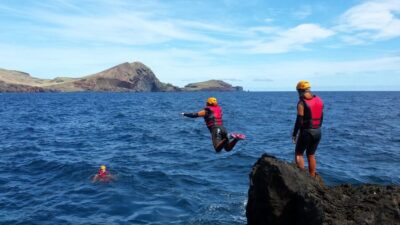
Coasteering Tour – Cliff jumping, swimming, scrambling.
Read our review →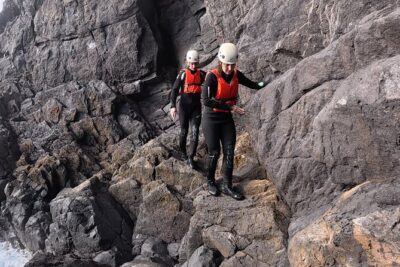
Coasteering Adventure with Snorkeling from Funchal
Read our review →
Browse the lists this tour appears in