
Reviewed · WORKSHOPS
Hands-On Bolo do Caco Baking Class with a Madeiran Family
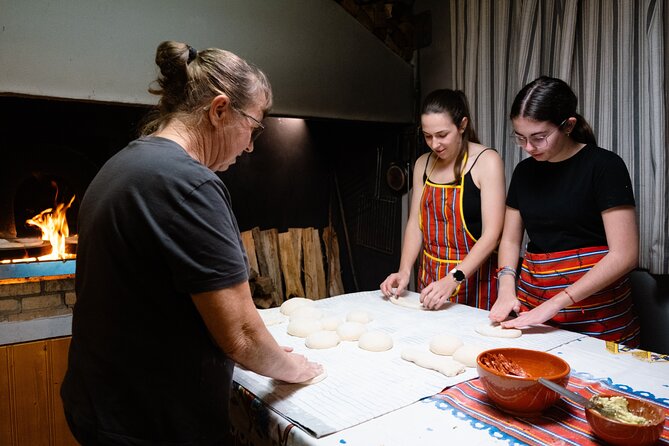
The best part of this Madeira experience is simple: you do not just eat Bolo do Caco, you make it in a family kitchen. Tonia and her family welcome you into their home, while her mother brings more than 40 years of bread-making experience to the lesson. You knead the dough, shape it by hand, cook it on a hot stone, and sit down together to eat.
I like the small group limit of five people, which should make the lesson personal rather than crowded. I also like the food served with the bread: garlic butter, Portuguese cheese, and chouriço turn a basic baking lesson into a proper Madeiran snack. The main consideration is that this takes place in a private home, so you should expect a relaxed family setting rather than a polished cooking school.
In This Review
- Key points at a glance
- Why Bolo do Caco matters in Madeira
- Entering a real family home
- Learning the story before touching the dough
- Kneading and shaping your own bread
- Watching Bolo do Caco cook on hot stone
- Sitting down with garlic butter and local flavors
- What the small group changes
- Who will enjoy this most
- Value, timing, and practical planning
- The honest tradeoffs
- Should you book this Bolo do Caco class?
- FAQ
- How long does the Bolo do Caco baking class last?
- Where does the activity start?
- Where does the activity end?
- Is the class offered in English?
- How many people can join the class?
- Who leads the baking lesson?
- What food is served with the bread?
- Are children and babies allowed?
- What is the cancellation policy?
Key points at a glance
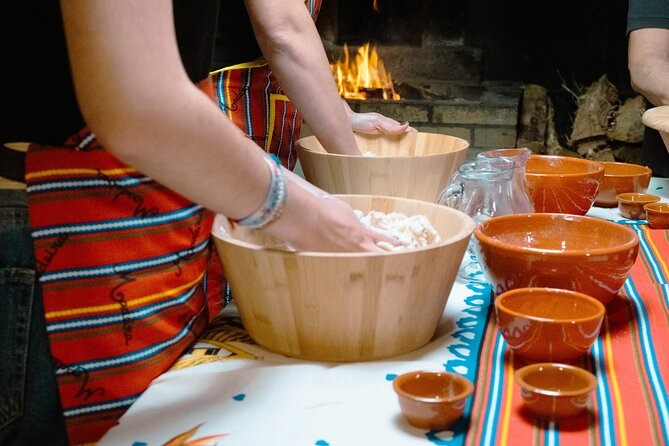
- Madeiran family kitchen: You visit a private home and are treated more like a friend than a customer.
- Mother’s baking experience: The main guide has more than 40 years of experience making bread.
- Cooked on a hot stone: You see the bread move from soft dough to a warm, browned loaf.
- Local pairings: Eat your Bolo do Caco with garlic butter, Portuguese cheese, and chouriço.
- Small group setting: A maximum of five people allows room for questions and practical help.
- Mountain backdrop: The home offers a calm setting away from a busy restaurant or formal classroom.
Why Bolo do Caco matters in Madeira
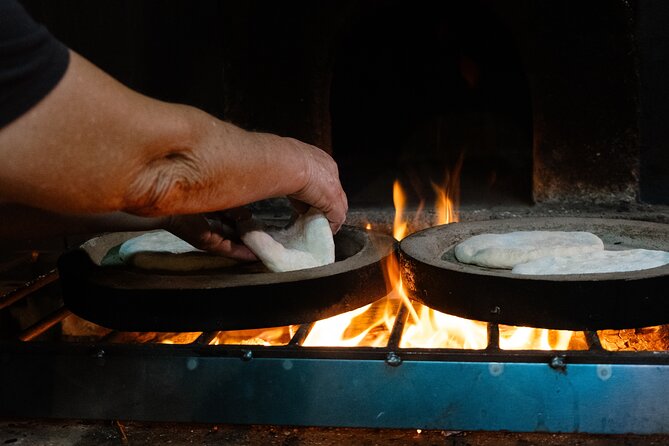
Bolo do Caco is one of Madeira’s best-known breads. Despite its name, it is not a cake in the usual sense. It is a round, flat bread traditionally cooked on a hot stone, giving it a firm outside and a soft center.
The bread is closely linked with everyday Madeiran food. It works as a snack, a side dish, or the base for a simple sandwich. Garlic butter is the classic partner, and the warm bread makes a good match for salty cheese and chouriço.
I like that this class explains the bread’s cultural role before you start kneading. That small bit of context helps you understand why the bread matters, rather than treating it as just another item on a cooking menu. You leave with a better sense of how local food fits into island life.
Other ways to spend a day on Madeira:
- From Funchal: Ecological Catamaran Dolphin Whale Watching
★ 4.5 · 5,771 reviews - Madeira: Skywalk, Porto Moniz, Seixal, and Fanal 4WD Tour
★ 4.9 · 5,732 reviews - Funchal: Dolphin and Whale Watching Catamaran Cruise
★ 4.5 · 5,697 reviews
Entering a real family home
The meeting point is Travessa do Lombo do Alho, 9360, Portugal. The activity begins and ends at this same point, so you do not need to arrange a separate return transfer as part of the class.
The setting is a family home, not a restaurant or a large commercial kitchen. That changes the mood. You can expect conversation, stories, laughter, and a warm welcome, but you should also be comfortable with an informal setup. This is not the best choice if you want a silent demonstration or a tightly timed professional kitchen lesson.
Tonia is part of the family hosting the class, and her aunt is also described as helping create the friendly atmosphere. Her mother is the family member with more than four decades of bread-making experience. The result is a lesson shaped by family practice, not a script written for a tourist attraction.
The mountain setting adds to the appeal. You are not only focused on a work surface and a bowl. You also have a quieter backdrop while you work, which makes the three-hour pace feel more like a visit than a quick class.
Learning the story before touching the dough
The class begins with an introduction to Bolo do Caco and its place in Madeiran culture. This is useful because the bread has a distinct method and identity. You learn what makes it different from ordinary oven bread and why cooking it on a hot stone matters.
The explanation should help you notice the details later. The shape, the texture, and the cooking surface all have a purpose. When you handle the dough yourself, those points become practical rather than abstract.
I prefer this order to a class that throws you straight into mixing ingredients. You first know what you are trying to make, then you get your hands involved. That makes the class easier to follow, especially if you have little baking experience.
The tone also seems suited to people who enjoy conversation. Tonia’s family shares stories as you work, so the cultural side is woven into the lesson instead of being delivered as a long speech.
Kneading and shaping your own bread
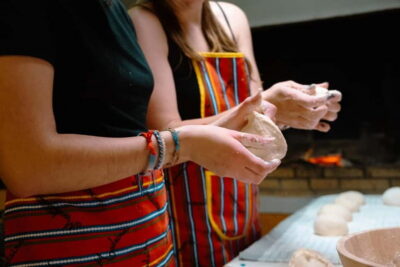
The hands-on part begins with kneading. You work the dough by hand, learning how it feels as it becomes more workable. This is where comfortable clothes matter. Flour, dough, and kitchen work can get messy, so dress for movement rather than for a formal meal.
You then shape the bread by hand. That step gives you a direct connection to the finished food. Instead of watching someone produce a perfect loaf, you take part in the process and see how your own piece develops.
A small group helps here. With no more than five people, there should be enough space for each person to work without feeling rushed. You can ask for help if the dough feels too sticky or the shape is not quite right. The class is a better fit for curiosity than perfection.
Families can bring children and babies. Space is available for children to play without disrupting the activity, which makes this more practical for parents than many cooking classes. Still, the class involves hot cooking equipment, so adults will need to keep an eye on young children throughout.
A few more Madeira walks and boat trips worth a look
- Funchal: Madeira Island Group Surf Lesson
★ 4.7 · 282 reviews - Madeira: Surf Lessons for All Levels
★ 4.8 · 191 reviews - Surfing Lessons in Madeira
★ 5.0 · 168 reviews - Madeira Surfing Lessons – Aroundfreedom Surf School
★ 5.0 · 104 reviews
Watching Bolo do Caco cook on hot stone
Cooking the bread on a hot stone is the most distinctive part of the process. It gives you something to watch as the dough changes from a soft round shape into a cooked loaf with color and texture.
This method also shows why Bolo do Caco is not simply a standard bread recipe with a different name. The heat source and the flat shape are part of its identity. You can see and smell the cooking process at close range, which is far more memorable than receiving a finished piece at a restaurant.
The kitchen atmosphere is part of the lesson here. Fresh bread, family conversation, and the sound of food cooking create the kind of small moment that can stay with you after a busy day of sightseeing.
The practical drawback is timing. A three-hour class is not a quick stop between major attractions. You need to set aside a good part of your day, and the experience will suit you best if you enjoy a slower pace. The schedule is approximate, so allow some flexibility rather than planning a tight appointment immediately afterward.
Sitting down with garlic butter and local flavors
Once the bread is ready, you gather around the table to eat it. The pairings are simple and well chosen: garlic butter, Portuguese cheese, and chouriço.
Garlic butter is especially important because it is one of the classic ways to serve Bolo do Caco. Spread over warm bread, it lets you judge the texture while the loaf is still fresh. The cheese adds a creamy, salty contrast, while chouriço brings a stronger, smoky flavor.
This final meal gives the class a clear payoff. You have handled the dough, shaped it, watched it cook, and now you get to eat the result. It is not a full restaurant meal, and you should not book it expecting a long tasting menu. Instead, think of it as a generous local snack built around a food you helped make.
I like this format because the meal is tied to the work. You are not just being served regional ingredients. You understand where the bread came from and why it tastes the way it does.
What the small group changes
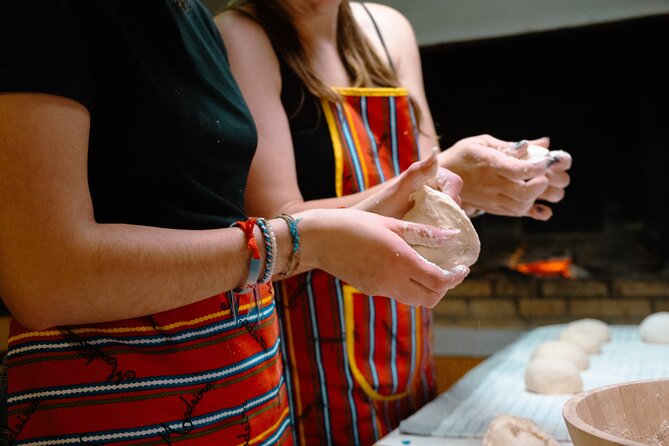
The maximum group size is five people. That detail matters more here than it would on a bus tour. Baking requires work space, access to the ingredients, and a chance to ask questions. A large group could turn the lesson into a demonstration, but this size should keep it personal.
A small class also makes the family setting feel more natural. You have a better chance to talk with Tonia and her relatives, hear their stories, and ask about the bread without competing with a room full of people.
The tradeoff is that small, home-based classes may not have the same structure as a cooking school. You should expect a friendly and flexible visit, not a formal lesson with printed stations and a strict professional timetable. For me, that is part of the appeal, but it will not suit everyone.
Who will enjoy this most
I would recommend this class to you if food is one of the reasons you travel. It suits anyone who wants more than a photograph of a local dish and prefers to understand how it is made.
It is also a good choice for visitors who value personal contact. The family welcome is central to the experience, and the warm atmosphere matters as much as the recipe. If you enjoy stories, conversation, and a meal around a shared table, this should fit well.
Families with children can consider it too. Kids are welcome, and there is room for them to play without causing trouble for the class. Parents should still plan to supervise them around the hot stone and kitchen equipment.
This may not be your best pick if you have limited time in Madeira, dislike getting your hands messy, or want a highly technical pastry course. It is also not the right choice if you prefer an anonymous restaurant meal. The point is participation and family contact.
Value, timing, and practical planning
No price is provided here, so I cannot judge the exact cost against other Madeira activities. The value will depend on how much you place on the private-home setting, the small group, the food, and the time with a family baker.
For me, the experience earns its value when you want something personal and local rather than another standard sightseeing stop. You are receiving a lesson, a cultural introduction, a shared meal, and access to a family home in one three-hour visit.
The mobile ticket makes booking simple, and confirmation is provided at the time of booking. The tour is offered in English, which removes a major concern for English-speaking visitors.
Wear comfortable clothes. You will knead and shape dough, and the activity is practical from the start. Service animals are allowed, though you may want to mention any needs when booking because this is a private home.
The cancellation terms are reasonable if your plans are firm. You can cancel up to 24 hours before the local start time for a full refund. Cancellations or changes made within 24 hours are not accepted for a refund.
The honest tradeoffs
The strongest feature is also the main thing you need to consider: this is a family-home visit. That means a warm, personal setting, but it also means less polish and less formal structure than you may find at a culinary school.
The three-hour duration gives the bread-making process room to unfold, but it takes time from other plans. You should not try to squeeze it between several distant stops.
The class is small, which is excellent for interaction, but places are limited. If you are traveling with a larger party, the five-person maximum may not work for everyone at once.
The activity ends back at the meeting point, which keeps the plan simple. However, the supplied details do not include transport arrangements to the starting address, so you should confirm how you will reach Travessa do Lombo do Alho before setting your day around it.
Should you book this Bolo do Caco class?
Book it if you want to meet a Madeiran family, work with your hands, and eat a local bread while it is still warm. The combination of Tonia’s welcome, her mother’s long baking experience, the hot-stone method, and the mountain setting gives the class a clear sense of place.
Skip it if your schedule is packed or you want a fast food tasting with no kitchen work. This is a slow, social activity, and its value comes from the time spent with the family as much as from the bread itself.
For an English-speaking visitor seeking a small and personal Madeira food experience, I would put this high on the list. Just arrive ready to knead, wear practical clothes, and leave enough time to enjoy the conversation.
FAQ
How long does the Bolo do Caco baking class last?
The experience lasts approximately three hours.
Where does the activity start?
It starts at Travessa do Lombo do Alho, 9360, Portugal.
Where does the activity end?
The activity ends back at the meeting point.
Is the class offered in English?
Yes. The experience is offered in English.
How many people can join the class?
The activity has a maximum of five participants.
Who leads the baking lesson?
Tonia’s family hosts the experience. Her mother guides the bread-making and has more than 40 years of baking experience. Tonia and her aunt are also part of the welcoming family setting.
What food is served with the bread?
The freshly made Bolo do Caco is served with garlic butter, Portuguese cheese, and chouriço.
Are children and babies allowed?
Yes. Children and babies are welcome, and there is space for children to play without disrupting the activity.
What is the cancellation policy?
You can cancel at least 24 hours before the local start time for a full refund. Cancellations or changes made less than 24 hours before the start time are not accepted for a refund.
Recently added Madeira trips
- Madeira: Private Guided Half-Day Tour of Northwest Madeira★ 5.0 · 3 reviews
- Basic Tour 1 – Shuttle (Quinta do Lorde to Cais do Sardinha) (one way)★ 4.5 · 3 reviews
- Amazing experience with Bees, honey and Pollen in Madeira Island★ 5.0 · 3 reviews
- Madeira: Craft Beer Tour★ 4.2 · 3 reviews
- Madeira all day jeep nature tours.★ 3.7 · 3 reviews
- Shore Excursion – Northwest Terraces and Volcanic Pools 4×4 tour★ 5.0 · 3 reviews
- Wine taste, 4×4 Jeep Adventure and Cabo Girão Skywalk★ 4.5 · 3 reviews
- Funchal: Sacred Art Museum of Funchal Entry Ticket★ 4.6 · 3 reviews
Workshops, compared.
Madeira Surfing Lessons – Aroundfreedom Surf School
Read our review →


Browse the lists this tour appears in