
Reviewed · WORKSHOPS
Madeira: Bolo do Caco Workshop with a Local Family
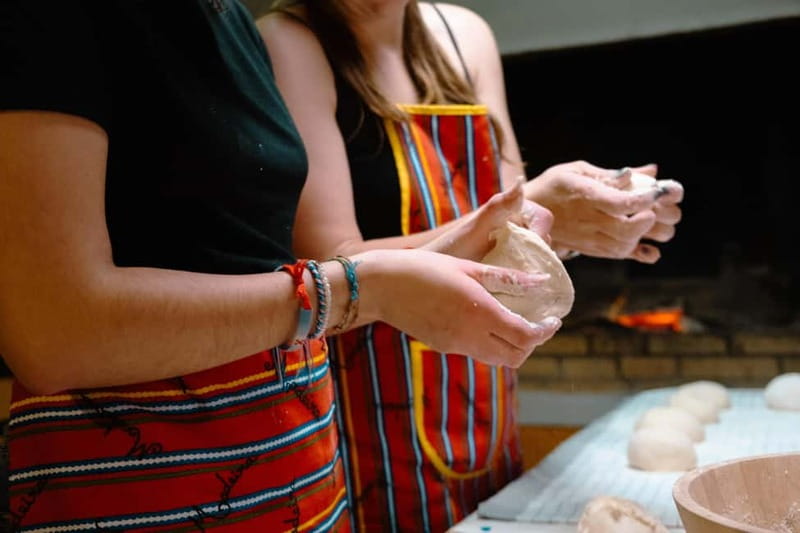
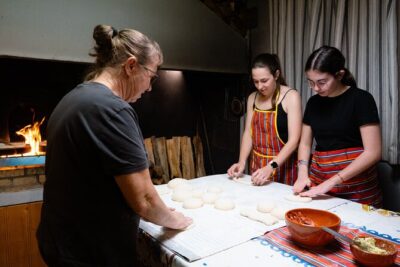
Madeira’s most memorable food experiences often happen away from restaurant tables. Here, you enter a family home, knead Bolo do Caco by hand, and watch it cook on a hot stone beside a rustic wood-fired oven. I like the small group of four, which keeps the session personal, and the chance to learn from the host’s mother, a baker with more than 40 years of experience.
I also like that this is not just a bread lesson. You sit down afterward with garlic butter, Portuguese cheese, chouriço, drinks, and fruit picked from the garden. The main consideration is the setting: this is a real family home, not a polished cooking school, so you should be comfortable with a relaxed, informal visit and hands-on work.
In This Review
- Key points at a glance
- Why Bolo do Caco makes a good Madeira lesson
- Entering Casa da Nati’s family home
- Kneading dough with a 40-year baker
- Cooking Bolo do Caco on a hot stone
- The table: garlic butter, cheese, chouriço, and fruit
- What $49 buys you
- Who will enjoy this most
- Timing, language, and practical planning
- How this compares with an ordinary food stop
- Should you book the Bolo do Caco workshop?
- FAQ
- How long does the Bolo do Caco workshop last?
- How much does the experience cost?
- Where does the workshop take place?
- How do I find the meeting point?
- Who teaches the bread-making?
- What will I do during the workshop?
- What food and drinks are included?
- Is the activity suitable for children?
- What languages are available?
- Can I cancel the booking?
Key points at a glance
- A real family kitchen: You enter the home of Casa da Nati and spend the session in a friendly, domestic setting.
- A seasoned baker: The host’s mother guides the baking and brings more than 40 years of bread-making experience.
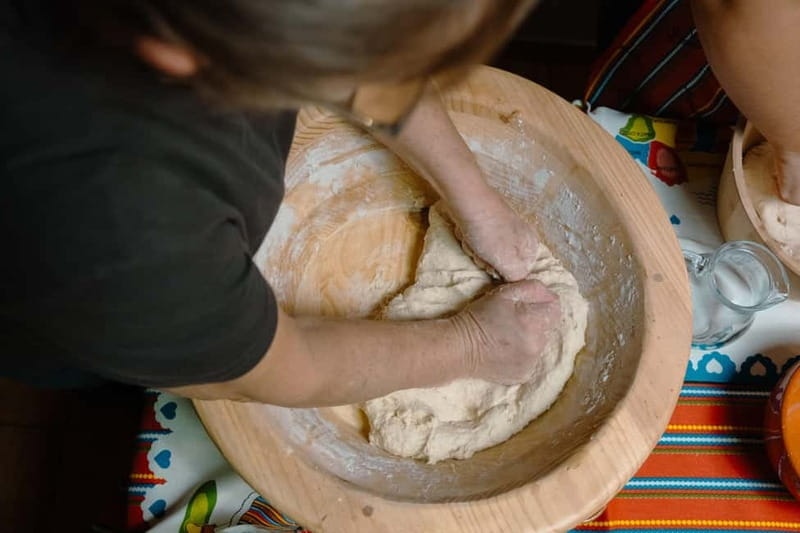
- Traditional cooking: You knead and shape the dough, then cook the bread on a hot stone near a rustic wood-fired oven.
- A full Madeira tasting: Fresh Bolo do Caco comes with garlic butter, Portuguese cheese, chouriço, drinks, and garden fruit.
- Very small group: The activity is limited to four participants, making it easier to ask questions and take part.
- Useful planning: The experience lasts three hours, costs $49 per person, and allows free cancellation up to 24 hours before the start.
Why Bolo do Caco makes a good Madeira lesson
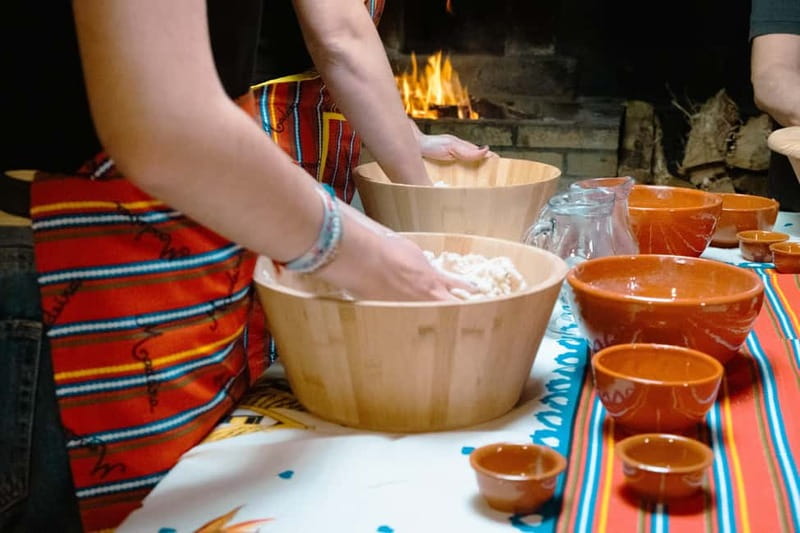
Bolo do Caco is one of Madeira’s best-known breads. It is round, soft, and traditionally cooked on a hot stone rather than baked as an ordinary loaf. The bread is strongly linked with the island’s everyday food culture, so learning to make it gives you something more useful than a quick snack tasting.
You begin with the story and cultural role of the bread before handling the ingredients. That context matters. It helps you understand why the cooking method is important and why Bolo do Caco is usually served with strong, simple pairings such as garlic butter, cheese, and sausage.
The session is practical from the start. You do not simply watch the baker work. You knead the dough and shape it yourself, with guidance along the way. That makes this a good pick if you enjoy food experiences where your hands stay busy.
You should not expect a formal culinary course with technical grading or a long list of recipes. The focus is one traditional bread, made in a family setting, followed by a generous tasting. For many people, that is exactly the point.
A few more Madeira walks and boat trips worth a look
- Funchal: Madeira Island Group Surf Lesson
★ 4.7 · 282 reviews - Madeira: Surf Lessons for All Levels
★ 4.8 · 191 reviews - Surfing Lessons in Madeira
★ 5.0 · 168 reviews
Entering Casa da Nati’s family home
The meeting point is house number 22, the last house on the street. You walk into the garden, go around to the back of the house, and call out to announce that you have arrived. The hosts will come to greet you.
That arrival instructions gives you a useful clue about the mood of the experience. You are not checking in at a hotel desk or joining a large group beside a tour bus. You are being welcomed into someone’s home, with the slightly informal feel that comes with it.
The setting is part of the appeal. The kitchen has a rustic wood-fired oven, and the home looks out toward the mountains. The food preparation takes place in an ordinary family environment, where conversation and stories are as important as the recipe.
This also means you should wear comfortable clothes. Flour, dough, and cooking work are involved, so it is better to arrive ready to use your hands rather than dressed for a formal meal. Kids and babies are welcome, and there is space for them to play without interrupting the baking.
The experience begins and ends at the same house. No separate transport is listed, so you need to plan your own way to house number 22. One especially helpful touch has been the possibility of a host dropping participants off in the village afterward, but you should not treat that as a guaranteed transfer service.
Kneading dough with a 40-year baker
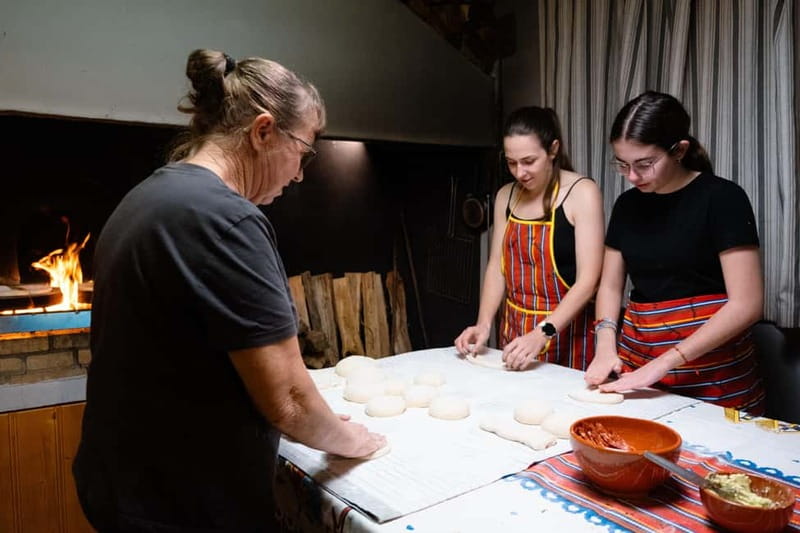
The host’s mother leads the baking part of the session. Her more than 40 years of experience is important here because Bolo do Caco is a bread where feel matters. Dough texture, shaping, and cooking time can be easier to understand when someone has made the bread for decades.
You learn the basic method first, then get to work with the dough. Expect to knead it and form the round loaves by hand. The instructor can explain what you are doing as you go, and the small group size should give you room to ask questions without competing with a crowd.
Language should be manageable for most international visitors. Instruction is available in Portuguese, English, and Spanish. The activity is limited to four people, so the host can give more direct help than you would receive in a large demonstration class.
I would book this for the process, not just the finished food. There is satisfaction in eating bread you have shaped yourself, even if your first loaf is not perfectly round. A family member who has baked for 40 years can also show the small practical details that are hard to pick up from a printed recipe.
The session has a social side, too. The kitchen is described as a warm place filled with stories, laughter, and the smell of bread cooking. If you prefer a quiet, highly structured class, this may feel loose. If you like talking with local people while learning a food tradition, that informality is a strength.
Cooking Bolo do Caco on a hot stone
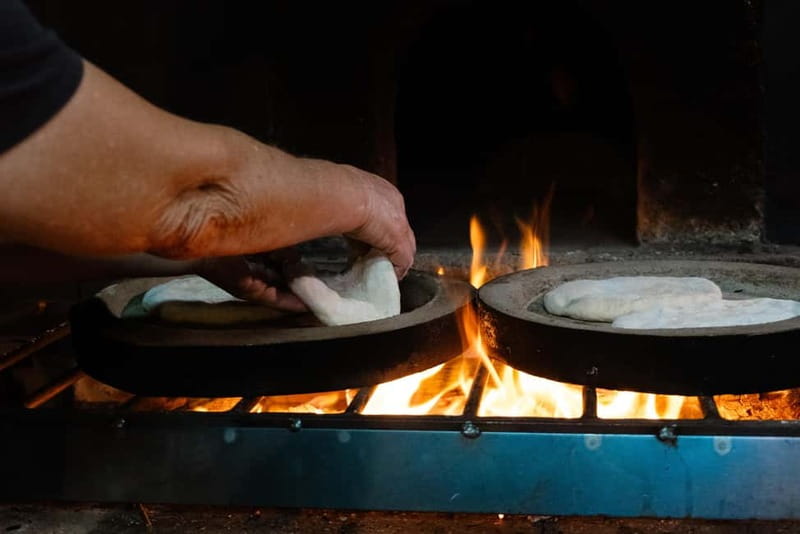
Once shaped, the bread cooks on a hot stone. This is one of the most distinctive parts of the activity because it connects the finished loaf with an older, more traditional way of preparing it.
You can watch the bread change as it cooks, then help with the next steps under the family’s direction. The nearby wood-fired oven adds atmosphere, though the key cooking method described for the bread is the hot stone. You are getting a clear look at how heat, timing, and hand-shaped dough work together.
The pace is likely unhurried. A three-hour experience leaves time for instruction, cooking, conversation, and eating. That is much longer than a quick sample at a market stall, but it also means you should not book it if you need to rush to another timed activity immediately afterward.
One practical benefit is that you may have bread to enjoy beyond the meal. One participant was able to take home a large amount of the bread, along with garlic butter and tangerines from the garden. This is a useful possibility, though the exact amount you take home may depend on what is prepared during your session.
Same island, a completely different kind of day:
- From Funchal: Ecological Catamaran Dolphin Whale Watching
★ 4.5 · 5,771 reviews - Madeira: Skywalk, Porto Moniz, Seixal, and Fanal 4WD Tour
★ 4.9 · 5,732 reviews - Funchal: Dolphin and Whale Watching Catamaran Cruise
★ 4.5 · 5,697 reviews - Funchal: Enchanted Terraces, Porto do Moniz & Fanal 4WD Tour
★ 4.8 · 4,930 reviews
The table: garlic butter, cheese, chouriço, and fruit
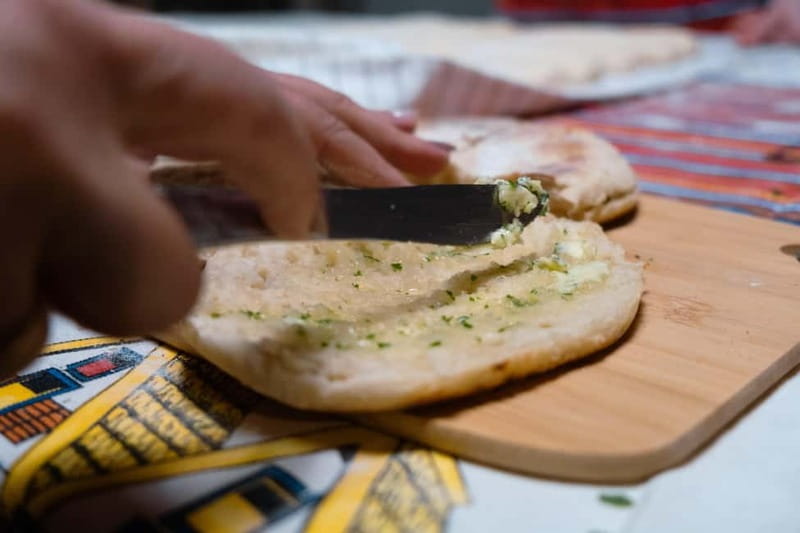
The tasting is a substantial part of the experience. Fresh Bolo do Caco is served with garlic butter, Portuguese cheese, and chouriço, giving you several classic ways to eat the bread.
Garlic butter is the pairing most closely associated with Bolo do Caco, and it brings out the bread’s soft texture. Cheese and chouriço make the meal more filling and give you a better sense of how the bread works as part of everyday Madeiran food rather than as a stand-alone sample.
Drinks are included, and fruit comes from the family’s garden when available. Fresh fruit picked from the trees gives the meal a direct connection to the home itself. Tangerines were specifically available during one visit, and you might find other fruit depending on the season.
The phrase if we have it, you can taste it captures the style of the visit. This is generous and spontaneous, but it also means the table should not be treated like a fixed restaurant menu. The listed pairings are garlic butter, cheese, chouriço, drinks, and garden fruit. Extra items may depend on what the family has at home.
If you have dietary restrictions, ask before booking or as soon as you arrive. The supplied details do not specify vegetarian, vegan, gluten-free, or allergy adaptations. Since the activity centers on bread and includes sausage and dairy, advance communication is sensible.
What $49 buys you
At $49 per person, this is not the cheapest way to taste Bolo do Caco. You can find bread for much less at a café or restaurant. The price makes more sense when you count the three-hour lesson, all baking ingredients, use of utensils, the meal and drinks, garden fruit, and the personal setting.
You are also paying for access to a family’s time and knowledge. The host’s mother has more than 40 years of bread-making experience, and the small group is capped at four. That works out to about $16.33 per person per hour, before placing a value on the meal and the bread you may be able to take home.
The value is strongest for someone who wants a cultural activity rather than a quick food stop. You get a skill, a story, a meal, and a connection with a local household. It is less useful for someone who only wants to eat Bolo do Caco and move on.
This is also a good activity to schedule during a longer Madeira stay. One participant who booked near the end of a two-week visit wished they had done it earlier, since the bread and garlic butter would have been handy for hikes and casual meals. That is a practical point: booking earlier may give you time to use what you learn and make during the rest of your trip.
Who will enjoy this most
I would recommend this experience to couples, solo visitors, families, and friends who like food with a personal story. The four-person limit is especially helpful for solo visitors, since you are not being placed in a large class where it is hard to speak with the instructor.
Families can bring children and babies. The home has room for children to play, and the hands-on work gives older kids a clear role. Very young children may not take part in every baking step, but they can be present without the family having to arrange separate care.
It is also a good match for people who have already seen a lot of Madeira’s main sights. After hikes, viewpoints, and town visits, a quiet afternoon with a local family offers a different view of the island.
You may want to choose another activity if you expect professional kitchen equipment, a formal printed recipe, or a broad cooking curriculum. This session teaches one signature bread and builds the rest around conversation and eating.
Timing, language, and practical planning
The activity lasts three hours, with start times based on availability. Check the calendar carefully because the exact starting time is not fixed in the information provided.
Wear clothes that can handle flour and food preparation. Comfortable clothing is more important than smart clothing, and you should be ready to stand, knead, shape, and move around the kitchen.
The meeting point is easy to identify in principle: house number 22, the last home on the street. Still, private-home meetings can feel less obvious than a public landmark, so allow enough time to find the house. Follow the instructions to enter through the garden and call for the family at the back.
The activity is offered in Portuguese, English, and Spanish. If you need a language not listed, do not assume it will be available.
Free cancellation is available up to 24 hours in advance for a full refund. You can also reserve now and pay later, which helps if your Madeira plans depend on weather or changing hike schedules.
How this compares with an ordinary food stop
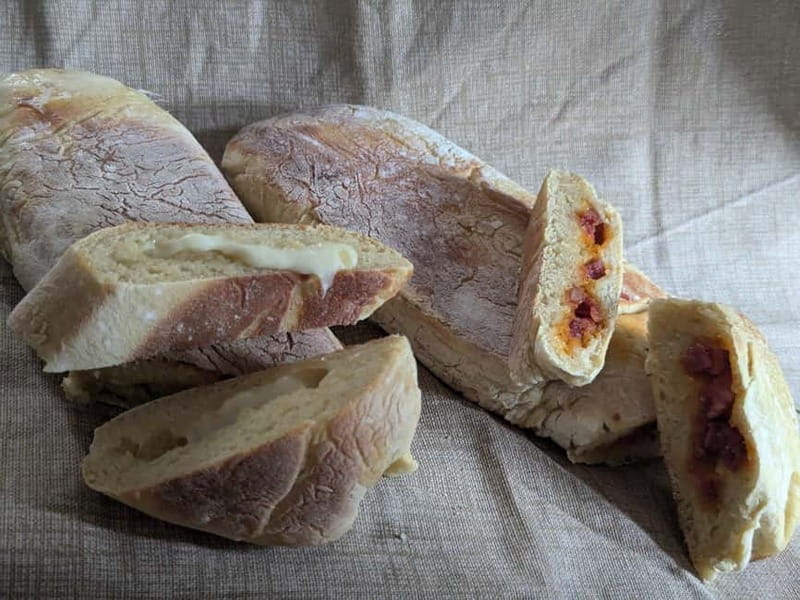
A restaurant meal gives you a finished plate. This experience gives you the making of the food, the setting where it is prepared, and time with the people who know the tradition.
The trade-off is efficiency. A restaurant is easier to fit between sightseeing stops, while this takes a full three hours and ends where it began. You need to travel to a residential meeting point and accept a family rhythm rather than a restaurant timetable.
The reward is a more personal connection. You see the oven, handle the dough, hear the family’s stories, and eat fruit from the garden. Those details are small, but they are exactly what separates a local food lesson from a standard tasting.
The 4.9 rating from 15 reviews supports the idea that the welcoming hosts and hands-on format are the strongest parts. The most consistent praise centers on friendly instruction, cooking and chatting together, tasting local fruit, and the generous food provided afterward.
Should you book the Bolo do Caco workshop?
Book it if you want to spend an afternoon learning one of Madeira’s signature foods in a real family home. The strongest reasons are the tiny group, the experienced baker, the traditional hot-stone cooking, and the meal of bread, garlic butter, cheese, chouriço, drinks, and garden fruit.
Think twice if you want a formal cooking school or need a tightly timed activity near a major sightseeing stop. You should also check dietary needs in advance because the available information does not promise special menus.
For most food-minded visitors, $49 is fair value for three hours of instruction and hospitality. I would schedule it early enough in your trip to enjoy any bread you take home during later hikes or relaxed meals.
FAQ
How long does the Bolo do Caco workshop last?
The activity lasts three hours. Starting times vary, so check availability when booking.
How much does the experience cost?
The listed price is $49 per person.
Where does the workshop take place?
It takes place at Casa da Nati, at house number 22, the last house on the street in Madeira.
How do I find the meeting point?
Enter the garden, walk to the back of the house, and call out to let the family know you have arrived. The hosts will greet you there.
Who teaches the bread-making?
The host’s mother leads the session. She has more than 40 years of bread-making experience.
What will I do during the workshop?
You learn about Bolo do Caco, knead the dough, shape it by hand, and cook it on a hot stone using traditional methods.
What food and drinks are included?
The experience includes freshly made Bolo do Caco, garlic butter, Portuguese cheese, chouriço, drinks, and fresh fruit from the garden.
Is the activity suitable for children?
Yes. Kids and babies are welcome, and there is space for children to play without disrupting the activity.
What languages are available?
The instruction is available in Portuguese, English, and Spanish.
Can I cancel the booking?
You can cancel up to 24 hours before the activity for a full refund. Reserve now and pay later is also available.
Recently added Madeira trips
- Madeira: Private Guided Half-Day Tour of Northwest Madeira★ 5.0 · 3 reviews
- Basic Tour 1 – Shuttle (Quinta do Lorde to Cais do Sardinha) (one way)★ 4.5 · 3 reviews
- Amazing experience with Bees, honey and Pollen in Madeira Island★ 5.0 · 3 reviews
- Madeira: Craft Beer Tour★ 4.2 · 3 reviews
- Madeira all day jeep nature tours.★ 3.7 · 3 reviews
- Shore Excursion – Northwest Terraces and Volcanic Pools 4×4 tour★ 5.0 · 3 reviews
- Wine taste, 4×4 Jeep Adventure and Cabo Girão Skywalk★ 4.5 · 3 reviews
- Funchal: Sacred Art Museum of Funchal Entry Ticket★ 4.6 · 3 reviews
Workshops, compared.




Madeira Surfing Lessons – Aroundfreedom Surf School
Read our review →


Browse the lists this tour appears in